
How to Check Bailey County Criminal History
Begin with the kind of event, not a broad name search. A recent arrest calls for Bailey County Jail and VINE. A felony filing belongs with the District Clerk. The County Clerk holds County Court misdemeanor files, while the Justice Court and Muleshoe Municipal Court keep their own fine-only cases. The Texas Criminal History Conviction Name Search adds reported statewide convictions and deferred adjudications, but it does not replace any local file.
Gather the full name, spelling variants, an approximate event or filing year, and a cause, citation, report, or booking number when one is known. Date of birth can help distinguish people with similar names, though each custodian decides what search data it will accept. Follow a simple sequence:
- Identify whether the target is custody, an agency report, a filed case, or a statewide history.
- Use the local custodian first and provide the narrowest useful name and date range.
- Check re:SearchTX or the Muleshoe citation portal when the court and case type fit.
- Compare the index result with the complaint, charging instrument, docket, and judgment.
- Order a certified copy from the clerk when proof of the disposition is required.
No One-Stop Bailey Record Search
Bailey County does not advertise a public criminal docket, jail roster, booking log, warrant list, or sheriff app. That absence is important. The County Clerk’s linked official-record system concerns land and official records and should not be described as the county criminal docket. Likewise, VINE is a custody and notification service, not a full arrest-history archive.
The useful fallback chain is direct and verified. Call the jail for present custody, send a focused Texas Public Information Act request for sheriff or booking material, and contact the clerk that holds the filed charge. Use re:SearchTX only as a supplement because clerk participation and document coverage vary. A blank online result does not prove that Bailey County has no responsive record.
Official Texas Background Checks
The Texas Department of Public Safety Crime Records Division maintains the state repository. Any member of the public may create an account for its name-based conviction search. The public result covers reported Texas convictions and deferred adjudications released by DPS. Each search credit costs $1. Card purchases add 2.25 percent per credit and a 25-cent transaction fee. DPS also lists a $10 offline name check. Names can produce false matches, so identity details and source court records matter.
A person reviewing their own Texas record can use a fingerprint-based personal review. Fingerprint Applicant Services of Texas works through IdentoGO by IDEMIA. Enrollment uses the correct service code and a scheduled location found by ZIP rather than an assumed Bailey County site. Research lists a $15 DPS personal review plus a $10 electronic-print fee. An FBI Identity History Summary is a separate subject-only federal product.
| Channel | Scope | Published cost |
|---|---|---|
| DPS public name search | Reported Texas convictions and deferred adjudications | $1 credit plus card fees |
| DPS offline name check | State name-based result | $10 |
| DPS fingerprint review | Personal Texas record review | $15 plus capture cost |
| FBI summary | Subject’s federal identity-history response | $18 plus fingerprints |
Four Bailey Records Counters
The compact downtown setting can hide a fragmented system. The Bailey County Courthouse at 300 South 1st Street houses both clerks, yet their files are not interchangeable. The District Clerk in Suite 130 holds felony cases from the 287th Judicial District. The County Clerk in Suite 200 holds County Court misdemeanor records and collects criminal fines and fees. General courthouse hours are Monday through Thursday from 8 a.m. to 5 p.m. and Friday from 8 a.m. to 1 p.m.; the County Clerk stops making copies at 4:15 p.m. on full days.
District Clerk
300 S. 1st St., Suite 130
Muleshoe, TX 79347
806-272-3165
County Clerk
300 S. 1st St., Suite 200
Muleshoe, TX 79347
806-272-3044
Justice Court
306 W. 2nd St.
Muleshoe, TX 79347
806-272-4300
Sheriff and Jail
405 W. 2nd St.
Muleshoe, TX 79347
806-272-4268
The official county homepage shows the courthouse and public schedule.

That page is the practical directory for checking live hours before a trip.
The Bailey County Clerk page confirms that the office maintains County Court criminal records, lists current contact details, and links its fee material.
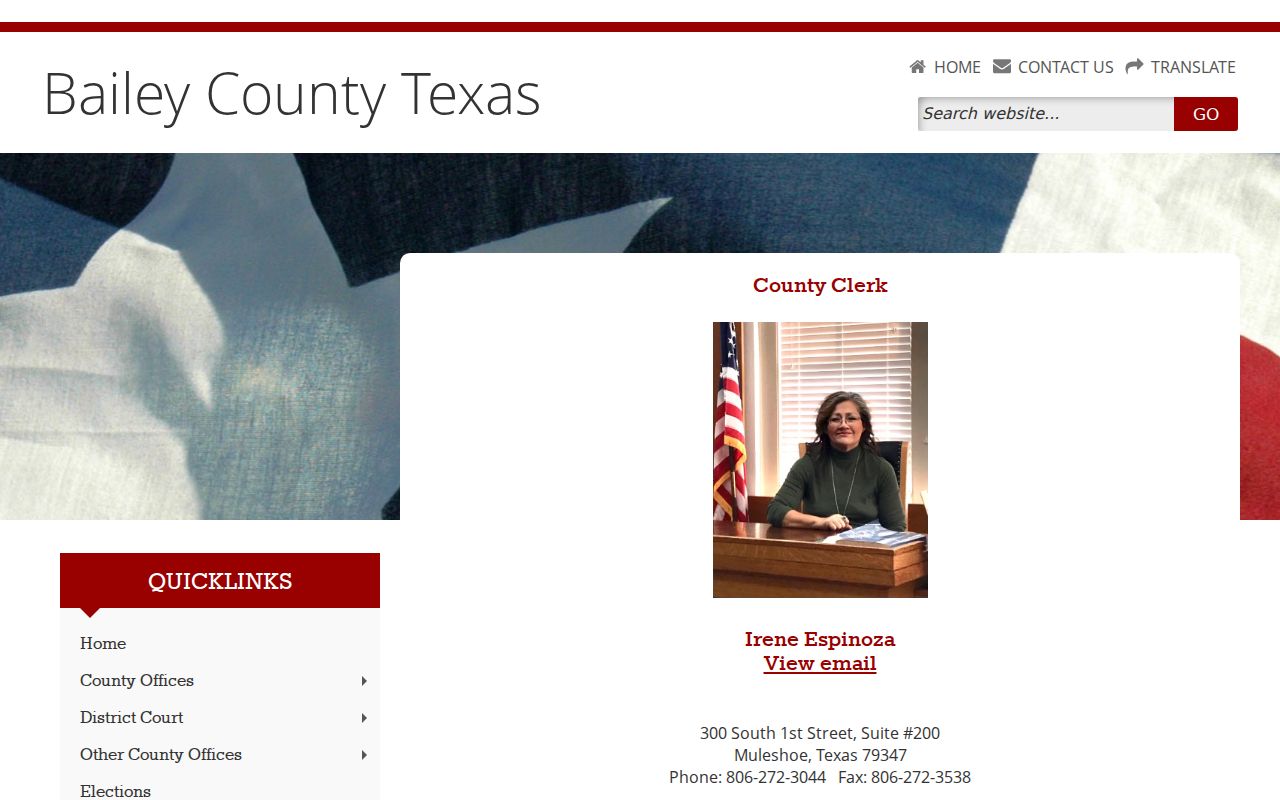
The linked land and official-record search should not be mistaken for a criminal docket. Call the clerk with a defendant name and approximate filing year. Ask whether the file is onsite, whether a cause number is available, and what plain or certified copies cost. The county publishes a fee link but the research does not establish one universal criminal-copy charge, so quoting a made-up flat rate would mislead the requester.
Types of Criminal Records
Each record answers a different question. An agency report describes an alleged event and the officer’s work. A jail file documents intake, bond, custody, and release. A court file shows the charge a prosecutor actually filed and the judge’s result. DPS links reportable cycles into a statewide history after agencies and clerks report their segments. Probation, parole, warrant, and registry data remain in their own systems.
- Arrest and booking records: ask the arresting agency for its narrative and the jail for intake details.
- Criminal court files: use the District Clerk for felonies and County Clerk for County Court misdemeanors.
- Fine-only cases: contact the Justice Court or search Muleshoe Municipal Court.
- Custody and supervision: use VINE, TDCJ, the local CSCD, or parole channels as appropriate.
- Registry entries: search the Texas Public Sex Offender Registry by name or place.
A Muleshoe Arrest Makes Two Records
Muleshoe Police Department owns the city incident or arrest narrative. Bailey County Jail owns the booking file after a custodial arrest is delivered there. A request to only one office can therefore return only half of the picture. MPD’s Communications/Records function is at 210 East Avenue C, telephone 806-272-4569. The sheriff and jail are at 405 West 2nd Street; the jail administrator line is 806-272-7619.
After prosecutors act, the filed charge may differ from the booking charge. County-level misdemeanors move to the County Clerk and felonies to the District Clerk. Fine-only city matters remain with Municipal Court. The Bailey County Sheriff page also directs the public to VINE.
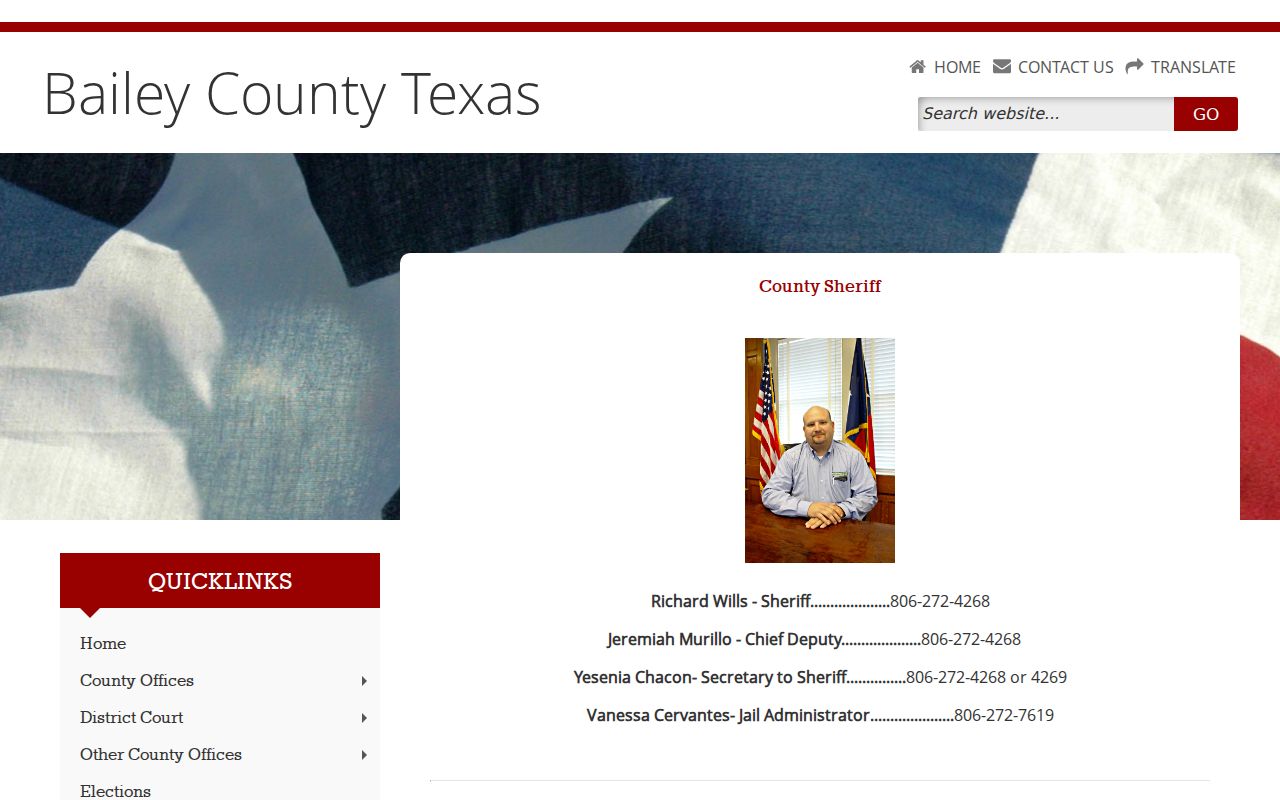
The official notice confirms VINE’s role without turning it into a complete booking archive.
What a Bailey County Criminal Record Shows
Fields depend on the source and stage. Identity data helps distinguish people. An arrest record may list the officer’s alleged offense, while a later information or indictment states the prosecuted count. Disposition means the outcome, such as dismissal, conviction, acquittal, or deferred adjudication. A judgment supplies the sentence and court action. Never read an arrest charge as the final result.
| Name and identifiers | Legal name, aliases, date of birth, and agency or state numbers when public. |
|---|---|
| Arrest and booking | Booking time, arresting agency, alleged charges, bond, holds, and release event. |
| Filed charge | Cause number, statute, offense degree, prosecutor’s charging instrument, and court. |
| Disposition | Dismissal, plea, verdict, deferred adjudication, or other court result. |
| Sentence | Jail or prison term, fine, credit, and supervision terms shown in the judgment. |
| Status | Custody, probation, parole, or registry information from the responsible system. |
Limits of the DPS Name Search
The DPS public portal is broad but narrow in purpose. It releases the conviction and deferred-adjudication layer that qualifying Texas agencies reported. It is not a live Bailey jail roster, full court docket, police report library, or proof that a person has never been arrested. An event can also be missing when a cycle was not reported or a disposition did not match its tracking number.
The DPS search entry point requires an account and prepaid credits.
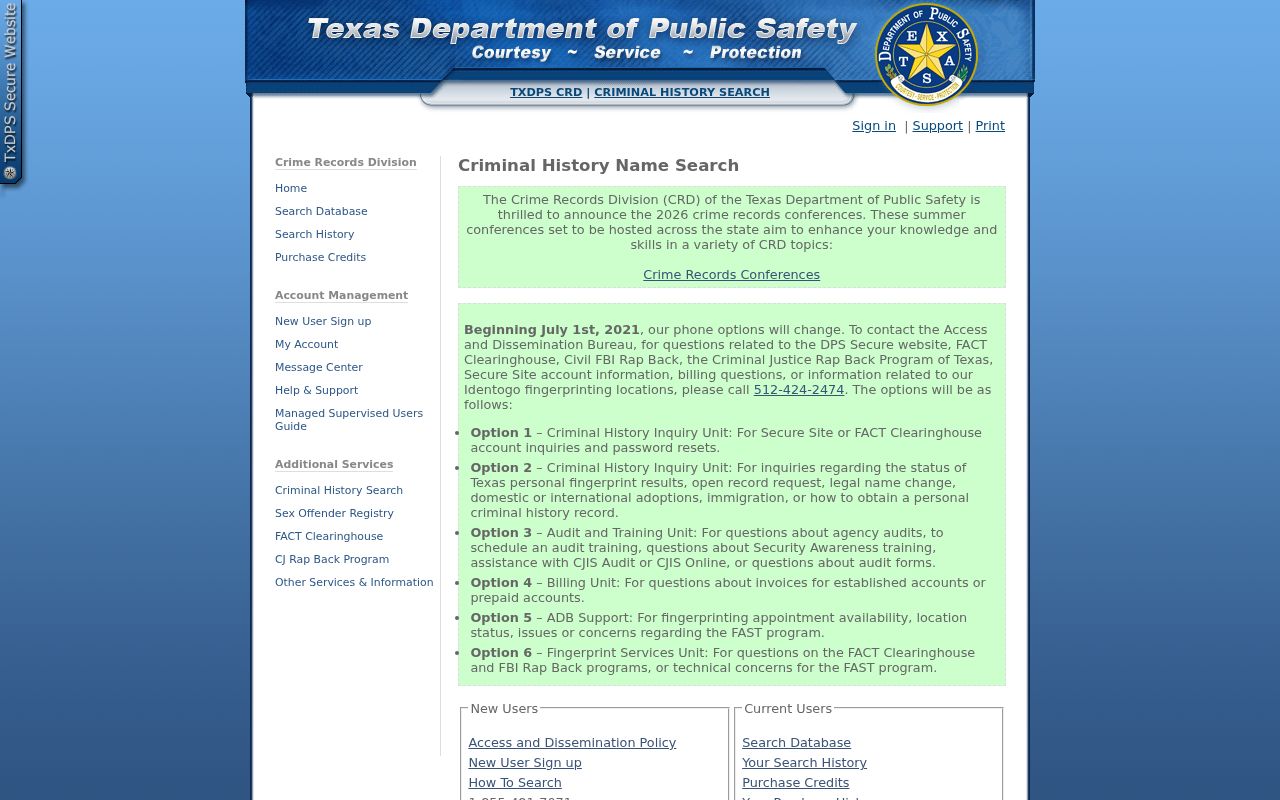
Use its match as a lead, then verify the person and result with the originating Bailey court.
Public Access Laws
The Texas Public Information Act governs requests for existing executive-branch records, including sheriff and police material, subject to exceptions. It does not guarantee delivery within ten business days. That period generally concerns an agency’s request for an Attorney General ruling when it seeks to withhold information. Court records follow judicial access rules, so criminal pleadings and judgments go to the clerk rather than through a sheriff request.
Key Texas laws:
Government Code Chapter 552 sets the Public Information Act process and exemptions.
Government Code Chapter 411 controls criminal-history dissemination, nondisclosure, and registry misuse.
Code of Criminal Procedure Chapter 55A contains the current expunction law.
Code of Criminal Procedure Chapter 62 governs sex offender registration.
Bailey Jail Records Without a Roster
For current custody, search VINELink by full name or jail identification number, then call the jail if no match appears. VINE offers free telephone and email notices, but timing and participation do not make it a complete historical booking log. Request the booking sheet, bond sheet, release record, or booking photograph from the sheriff and jail under the Public Information Act. No local fee schedule is published, so ask for an itemized estimate.
The county links directly to VINE for custody help.
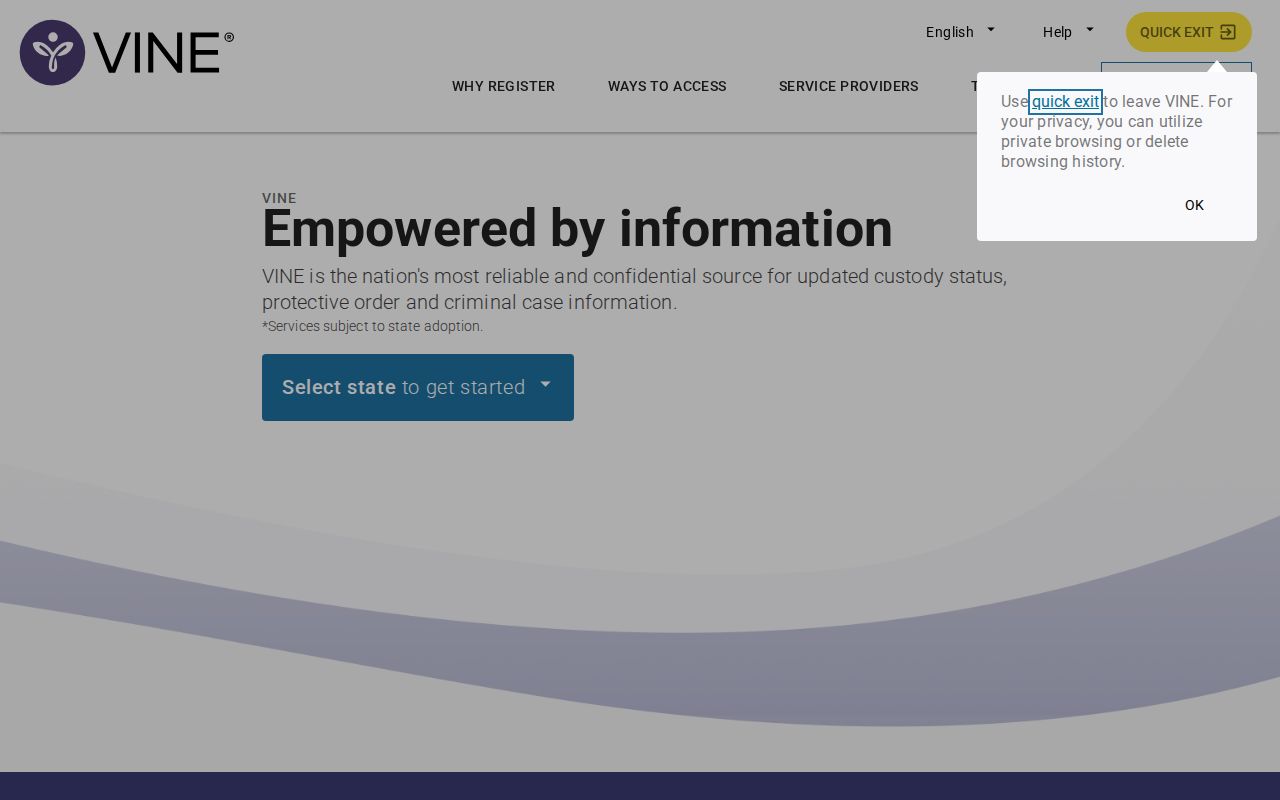
A state-sentenced prisoner belongs in TDCJ Inmate Information Search, not VINE alone.
Sealed, Expunged & Restricted
Texas expunction under Code of Criminal Procedure Chapter 55A can require agencies to destroy or return qualifying records, but eligibility turns on the arrest and case outcome. An order of nondisclosure under Government Code Chapter 411, Subchapter E-1 is a companion sealing tool that limits public disclosure without erasing every authorized use. Neither remedy follows automatically from every dismissal.
Juvenile law-enforcement records are generally confidential under Family Code Section 58.008. Active-investigation material, protected victim data, driver-license data, and confidential criminal-history information can also be withheld or redacted. When a public result conflicts with a court outcome, obtain a certified judgment from the Bailey clerk before using the DPS correction or review channel.
The 2025 Bailey Intake Finding
A May 2025 Texas Commission on Jail Standards notice gives an unusually clear example of why record completeness matters. Inspectors reviewed ten sampled mental-disability and suicide-prevention screening instruments. Five had affirmative answers that lacked the required remarks. The finding cited the intake-screening rule in 37 Texas Administrative Code Section 273.5(b). It concerned documentation on screening forms, not overcrowding, building conditions, or a finding about every jail record.
The dated notice should not be turned into a claim that the jail remains out of compliance today. The commission maintains a live noncompliant-jails page for current status. For a records searcher, the narrower lesson is useful: an official form may exist yet still lack a required explanation. When a booking or custody entry seems incomplete, request the underlying intake or court material that can lawfully be released and ask the custodian about the gap. Do not fill missing fields with an assumption based on another record.
Bailey’s Shared 287th District
The 287th Judicial District covers Bailey and Parmer counties. Shared judge, prosecutor, or electronic filing references do not mean a Bailey case changed counties. A felony filed in Bailey remains with the Bailey District Clerk. Contact Suite 130 at 806-272-3165 for the local file and the court at 806-272-5460 for scheduling questions.
The District Clerk page identifies the felony-record counter.
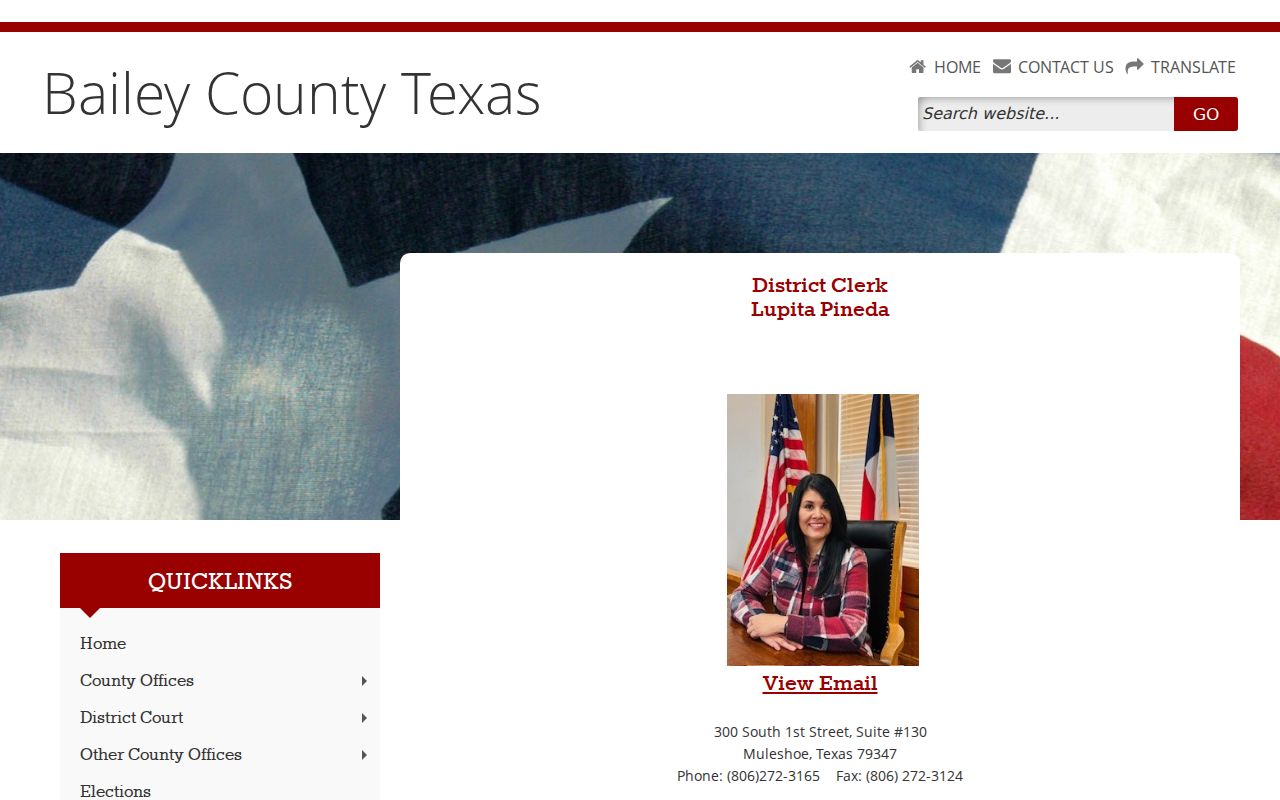
That direct clerk channel is vital when re:SearchTX has no Bailey match.
The statewide re:SearchTX portal can still help locate participating-court records.
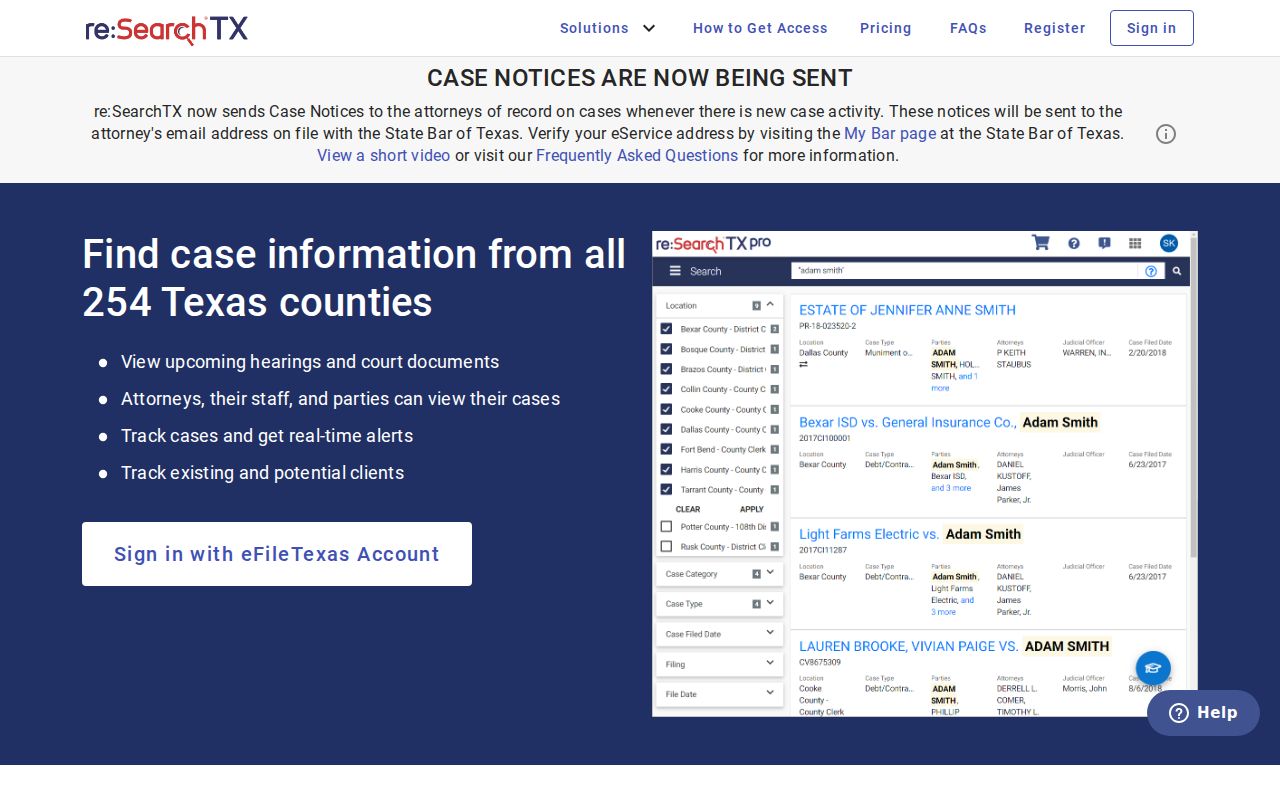
Coverage and available documents remain dependent on the contributing clerk.
Resolving a Bailey County Warrant
No public countywide warrant database exists. Call the issuing level: the Sheriff for execution information, District Clerk for felony entries, County Clerk for misdemeanor entries, Justice Court for JP warrants, or Muleshoe Municipal Court for city capias matters. The municipal citation portal may expose a case, but it is not a complete warrant search. Ask which office can confirm the current status rather than relying on an old third-party list.
Confirm the cause or citation number, issuing court, alleged charge, and appearance or bond instructions before acting. A capias pro fine after judgment differs from a pretrial warrant. Sealed, juvenile, and newly issued warrants may not appear in a public response, while TCIC and TLETS remain law-enforcement systems. If the court requires a personal appearance or counsel, follow that official direction. A portal balance alone does not establish that payment will clear every warrant or hold tied to the case.
Criminal Records by City in Bailey County
Muleshoe is Bailey County’s only incorporated city. Its police department creates city incident reports, and its Municipal Court keeps fine-only traffic, ordinance, and state-law cases. More serious filings move to the county or district court, while custodial arrests can create a separate Bailey jail record. Unincorporated places such as Maple and Enochs do not have city police departments or municipal courts and therefore do not warrant invented city pages.
Muleshoe Criminal History
2020 population 5,160 · MPD reports and a five-path Municipal Court citation search